Blog

Restoring Gun Rights in Arizona in 2025

Maricopa County Resoring Gun Rights

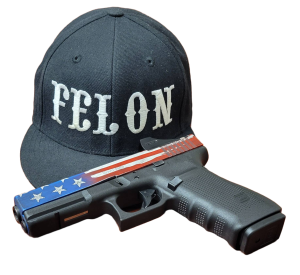
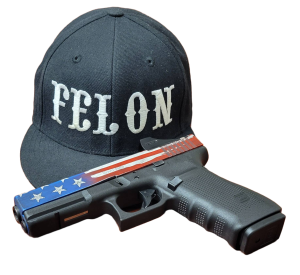
In Arizona, gun rights restoration can be a complicated process. If you lost your rights because of a felony conviction or other legal issues, it’s important to know how Arizona gun laws work and what the future holds for your gun restoration rights. In this blog, we’ll take a closer look at Arizona’s current gun laws, how to restore your gun rights, and the latest developments in 2025 under the leadership of DA Pam Bondi.

Arizona Gun Laws and Gun Rights Restoration

Arizona’s gun laws are generally considered to be among the more permissive in the United States. The state allows its residents to carry and own firearms, with few restrictions.
To restore your gun rights in Maricopa County, you generally need to go through the Maricopa County Superior Court . The process starts by determining your eligibility for restoration. In most cases, individuals who have completed their sentence, including probation or parole, can apply for the restoration of their firearm rights. However, the process can be more complex if you’ve been convicted of a serious offense or have multiple felony convictions.

Pam Bondi and the Latest Gun Rights Restoration Laws in 2025

One of the most significant developments in Arizona gun laws came from the office of DA Pam Bondi. Under her leadership, Arizona’s laws surrounding gun rights restoration have become clearer and more accessible. Bondi’s office has pushed for reforms that streamline the application process, making it easier for eligible individuals to regain their gun rights.

The key changes include:

  • Simplified Application Process: The process to restore gun rights has been made more transparent, with clearer instructions and requirements for individuals seeking to apply.
  • Expanded Eligibility: More individuals who have completed their sentence, including certain types of felony convictions, may now be eligible to restore their rights. This includes those who may have previously been restricted from owning a firearm.
  • Faster Processing Times: With updated procedures, gun rights restoration applications in Maricopa County and throughout Arizona are processed more efficiently, ensuring that people aren’t left waiting for years to regain their rights.

What Does This Mean for You?

If you're someone in Arizona who is interested in restoring your gun rights, these changes could greatly impact you. The future outlook is promising, with more opportunities for those who meet the eligibility criteria to restore their firearm rights.
However, it’s important to note that even though Arizona has made strides in making this process easier, restoring your rights still requires legal steps. You’ll need to submit an application, provide documentation of your completed sentence, and possibly attend a court hearing.

How ‘Restore My Civil Rights’ Can Help You

At Restore My Civil Rights in Phoenix, Arizona, we are dedicated to staying up to date with the latest gun laws and helping people who have lost their gun rights navigate the restoration process. We understand the importance of your rights, and we will guide you through the legal steps involved in regaining your firearm rights.
Whether you’re applying for gun rights restoration in Maricopa County, or another county in Arizona, we can provide the legal assistance you need to ensure your application is properly filled out and filed. Our legal team has extensive experience in handling gun rights restoration cases, and we can help make the process as smooth as possible for you.

Contact Us Today

If you're looking to restore your gun rights in Arizona, Restore My Civil Rights can help. We’re committed to keeping you informed and providing the legal support to get your rights back. Don’t navigate this process alone — contact us today for a free consultation.

Recommended Posts

Trump Administration Revives Federal Firearm Rights Restoration Provision

(Reprinted from NRA-ILA, March 21, 2025) On March 20, the U.S. Department of Justice (DOJ) published an interim final rule entitled, Withdrawing the Attorney General’s Delegation of Authority. That bland title belies the historic nature of the measure, which is aimed at reviving a provision of federal law that could, for the first time since 1992, allow federally prohibited persons to petition for restoration of their Second Amendment rights. more Federal law – codified at 18 U.S.C. 922(g) – imposes a ban on firearm possession and receipt for 13 categories of individuals based on certain underlying convictions or events. For most categories, the ban is presumptively permanent. The most prominent of these categories includes those who have been “convicted in any court of … a crime punishable by imprisonment for a term exceeding one year.” The crimes, under ATF’s interpretation of the statute, can include not just felonies but misdemeanors punishable by more than two years imprisonment. Theoretically, the ban does not count with respect to convictions that have been “expunged … or set aside or for which a person has been pardoned or has had civil rights restored.” Federal case law, however, has severely narrowed the effectiveness of most state expungements or rights restoration procedures in removing federal firearm disabilities. Thus, a person could have had his or her Second Amendment rights restored at the state level but still be federally ineligible. This would effectively prevent a person from buying a firearm from a gun shop or from having a concealed carry permit or license. It is extremely difficult, moreover, for most ordinary folks to get the governor of their state or the president interested in hearing their pardon requests. Nevertheless, the Gun Control Act (GCA) did offer another option codified at 18 U.S.C. 925(c), a petition to “the Attorney General for relief from the disabilities imposed by Federal laws” The Attorney General is empowered to “grant such relief if it is established to his satisfaction that the circumstances regarding the disability, and the applicant's record and reputation, are such that the applicant will not be likely to act in a manner dangerous to public safety and that the granting of the relief would not be contrary to the public interest.” That program had formerly been administered by ATF, under a delegation of authority from the Attorney General’s Office. ATF data from 1981 to 1991 show that 13,790 “relief” investigations were conducted during that time. Of these, 5,598 cases (about 40.6%) were approved and 3,498 (about 25.4%) were denied.  The remaining applicants either abandoned their applications, were not disqualified, were ineligible under state law (state eligibility was required by ATF), or were on parole or probation. In 1992, however, Congress passed an appropriations rider defunding ATF’s administration of the program. This was due to concerns over the amount of resources ATF was diverting from its other law enforcement and regulatory programs to process the petitions, as well as lobbying by anti-gun groups, who claimed that restorations endangered public safety. Of course, these were the same groups that believed possession of firearms by any private individual posed a public safety hazard. Nevertheless, that appropriations rider has been renewed every year since, effectively foreclosing restoration of full Second Amendment rights for most federally prohibited people. As we reported recently, however, that has begun to change under the Trump administration, which cleverly (and correctly) determined that the AG did not have to delegate the function to ATF but could assign it to another DOJ component not subject to the funding rider. Indeed, the administration has already gone forward with considering petitions through the Office of the Pardon Attorney. The current DOJ rulemaking formally revokes ATF’s jurisdiction over this function so that the funding rider does not pose an ongoing impediment to the consideration of petitions.  As it states in the preamble: With such a clean slate, the Department anticipates future actions, including rulemaking consistent with applicable law, to give full effect to 18 U.S.C. 925(c) while simultaneously ensuring that violent or dangerous individuals remain disabled from lawfully acquiring firearms. NRA has long advocated for the proposition that if a person is safe enough to be free of government restraint on his or her freedom, that person is presumptively safe enough to exercise fundamental rights, including the right to keep and bear arms. In the case of prohibited person laws, a single incident could result in a lifetime ban on Second Amendment rights, even if the person never spent a day in jail and even if the triggering offense or other circumstance did not involve violent, aggressive, or weapons-related behavior. Most of the federal prohibited person categories have no necessary relationship to violent tendencies. At the very least, people caught up in these categories should have an opportunity to make the case they have paid their debt to society, where applicable, and can be trusted to safely exercise their rights. Indeed, in the wake of the 2022 NYSRPA v. Bruen opinion by the U.S. Supreme Court, several federal court decisions have found applications of the federal prohibited person laws unconstitutional under the Second Amendment because there is no historical tradition in the U.S. of permanently disarming harmless people. An editorial by two law professors in The Washington Post even suggested that an effective pathway for relief from firearm disabilities may be necessary to keep the federal prohibited persons categories (which they admit are over-inclusive) from being facially invalid under the Second Amendment. Comments on the rule may be submitted online at Regulations.gov., which also has the full text of the interim final rule. Submissions should respectfully address the necessity for government action on this issue, as well as any suggestions for its lawful and efficient implementation. It is important to remember that petitions under the new rule will be considered on a case-by-case basis. This is not a broad amnesty for violent convicts to rearm themselves, whatever hysterical pronouncements may come from firearm prohibitionists who will reflexively oppose the rule. It’s also important to remember that the NICS Improvements Act of 2007 uses the same standard for restoration in the context of the GCA’s mental health prohibitors, and those restorations have been ongoing since 2008. Moreover, relief under 18 U.S.C. 925(c) was available from 1968 to 1992, so restarting the program is not breaking new ground. One of the leading critics of relief under 18 U.S.C. 925(c) published a report in 1992 that described 100 cases of individuals granted relief, as well as information on the 47 individuals out of the 1,781 granted relief between 1985 and 1990 who were later re-arrested (but not necessarily formerly charged or convicted). Most of the re-arrests were for offenses that had nothing to do with firearms. Some were apparently unjustified arrests based on the records for which relief had already been granted. A number were for vehicle-related offenses, including driving under the influence. Some of the cases had been dismissed. For most of them, though, a final disposition was not available. For cases for which dispositions were available, only 4 (or 2 tenths of 1%) appeared to involve interpersonal violence. It’s unclear, moreover, if any of those involved a firearm or other weapon. Thus, while a few people did reoffend, it’s not clear that those who were granted relief were any more likely to commit a crime of interpersonal violence than individuals in the general population with no prior involvement in the criminal justice system whatsoever. The report’s description of the crimes for which people were granted relief, moreover, were no doubt intended to shock the reader. In some cases, though, they instead make the case for how the federal prohibitors sweep in people whose actions displayed no tendency to create a physical risk to other people. The most common category of crime for which people were granted relief (22%) was simple theft, a property crime. Some offenses bordered on the comical, including operating an illegal still, illegal interstate sale of deer antlers, failure to disclose tips on a tax return, theft of $100 worth of soap powder, “grand larceny of a cow,” theft of an air conditioner, and filing a “false report with the Department of Agriculture concerning the collection of blood samples from a herd of pregnant dairy cattle being exported to Tawain.” In any case, fundamental rights like the Second Amendment are not a reward bestowed by the government on a discretionary basis for exemplary behavior. Rather, they are limits on its authority the government is required to obey. The NRA commends the Trump Administration for taking this decisive action to protect the right to keep and bear arms and looks forward to filing its own comment in support of the interim final rule.

Bill of Rights document symbolizing federal firearms rights restoration under 18 U.S.C. § 925(c)

Federal Firearms Rights Restoration Is Poised to Reopen

(Restore My Civil Rights evaluates eligibility and prepares clients for federal firearms rights restoration under 18 U.S.C. § 925(c) once the DOJ rule is finalized. State-level rights restoration services are offered by our Arizona State Bar admitted attorney, Andrew Long, only for Arizona matters.) Federal Firearms Rights Restoration Under 18 U.S.C. § 925(c): DOJ Proposed Rule Explained For decades, individuals who lost their federal firearms rights after a felony conviction had virtually no meaningful way to restore those rights under federal law. This landscape may soon change. more In July 2025, the U.S. Department of Justice formally proposed new rules to reopen the federal firearms rights restoration process under 18 U.S.C. § 925(c). The public comment period has now closed, and the Department is reviewing submissions prior to issuing a final rule. If finalized as proposed, this would represent the most significant development in federal firearms rights restoration in more than 30 years. What the Proposed DOJ Rule Would Do Under the proposed rule, certain individuals subject to federal firearms disabilities would be able to apply directly to the Attorney General for relief under § 925(c). Unlike the system that existed prior to the early 1990s, the proposed framework establishes defined eligibility standards, structured review criteria, and procedural safeguards. Importantly, the rule would allow applications without requiring a Presidential Pardon, which has historically been the only viable federal option. The proposed rule may also create a federal pathway for individuals who live in states that do not provide a court-based mechanism to restore firearm rights under state law. Who May Be Eligible for Federal Firearms Rights Restoration Eligibility would not be automatic and would depend on the nature of the conviction and post-conviction conduct. Under the proposed criteria, individuals with non-violent felony convictions may become eligible after 5 or 10 years of demonstrated law-abiding behavior, depending on the offense. Violent crimes, sex offenses, domestic violence convictions, and serious firearm-related offenses would be presumptively disqualifying. Federal firearms rights restoration may be available to individuals who: Have a non-violent felony conviction Have completed all sentencing and supervision Have demonstrated years of law-abiding behavior Are not subject to current disqualifying prohibitions Each application would be reviewed individually, with a focus on dangerousness, rehabilitation, and public safety. Federal Firearms Rights Restoration vs. State Law Relief under 18 U.S.C. § 925(c) would apply only to federal firearms disabilities. It would not override state firearm prohibitions. Depending on where a conviction occurred or where an individual currently resides, federal relief may or may not restore the ability to possess firearms under state law. Determining whether a federal application would actually accomplish a client’s objectives requires careful analysis of how federal and state law interact. Important: Filing an application too early—or submitting an incomplete or poorly supported application—can result in denial and may negatively impact future eligibility. How Restore My Civil Rights Can Help Restore My Civil Rights focuses exclusively on civil and firearms rights restoration, with a particular emphasis on federal relief. RMCR evaluates eligibility and prepares clients for federal firearms rights restoration under § 925(c) once the DOJ rule is finalized. We also analyze whether unresolved state-law barriers would prevent federal relief from having practical effect. For matters requiring state-level court action, RMCR provides representation only in Arizona. For individuals outside Arizona, we do not perform state court filings but can assess whether state restrictions would limit the usefulness of federal relief. If you were previously told that restoring your gun rights was impossible, that advice may no longer be accurate. To find out whether you may qualify for federal firearms rights restoration, call (855) GUN-RIGHTS or click here to book a free consultation today.

Maricopa County Resoring Gun Rights Lawyer

Restoring Gun Rights in Mesa, Arizona: What You Need to Know

If you lost your gun rights in Arizona, there is hope. At Restore My Civil Rights, we help people in Mesa, AZ restore their right to own and use a firearm legally. more What Are Gun Rights? Gun rights refer to your legal right to own, carry, or use a firearm. These rights are protected by the Second Amendment—often called the Gun Rights Amendment—but can be taken away after a felony conviction or certain domestic violence charges. Can a Felon Get His Gun Rights Back in Arizona? Yes. In many cases, felons in Arizona can get their gun rights back—but it’s not automatic. You must file a request with the court and meet specific rules. Timing depends on the type of conviction, and you may need to first restore your civil rights. How to Restore Your Gun Rights If you live in Mesa, or anywhere in Maricopa County, here’s how restoring gun rights in Arizona works: Review your criminal record File for restoration of civil rights Submit a petition for gun rights restoration Wait for court approval Our experienced gun rights lawyers in Mesa will guide you through each step. How Can I Check If My Gun Rights Have Been Restored? To see if your rights were restored, check your court records or contact the Arizona Department of Public Safety (DPS). If you're unsure, speak with a Mesa gun rights attorney to review your case. How Can Our Gun Rights Lawyer Help? As experienced gun rights attorneys, we understand Arizona laws and what it takes to win your case. At Restore My Civil Rights, we’ve helped veterans, hunters, and former felons across Mesa and Maricopa County get their rights back. We handle the paperwork, court filings, and represent you throughout the process. You Have a Right to Be Heard Whether you want to hunt again, protect your home, or just regain your dignity—restoring your gun rights is possible. Learn more about how we can help with the Restoration of Civil Rights process. Call Now to Start Your Gun Rights Restoration in Mesa, AZ If you're in Mesa and want to restore your gun rights, don’t wait. Call us today or fill out our online form to speak with a Mesa gun rights lawyer.